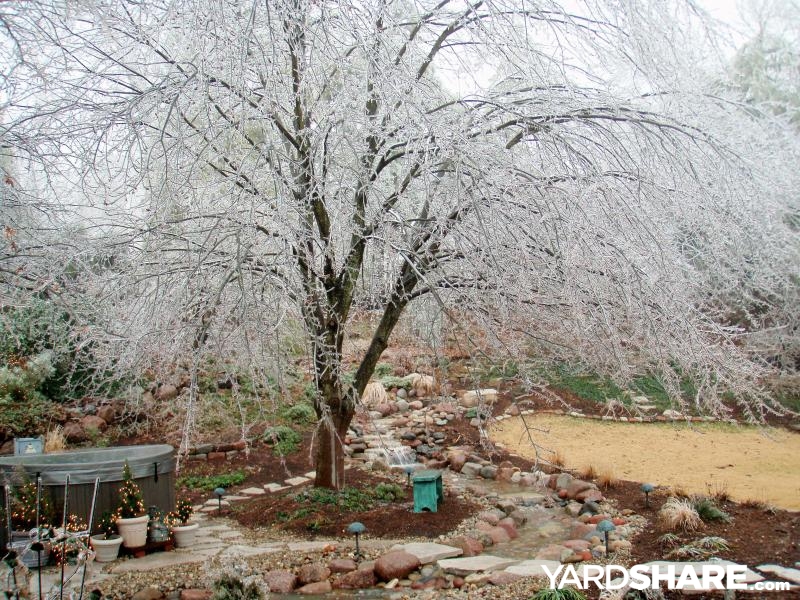
A tree coated in ice after a winter storm at Backyard Oasis in the midwest in Missouri, Zone 7, with mulched beds, a stone path, and potted evergreens below.
By late November, most of us have had a taste of cold, but the first hard freeze of the season is still the one that catches plants, and gardeners, off guard. A night in the low 20s, or an ice storm like the one that coated the tree in the photo above, does its damage fast. The good news is that the work that prevents most of it is simple, cheap, and fits in one weekend: water, mulch, covers, and shelter for pots.
None of this is about keeping plants warm like a house. It is about keeping roots steady, keeping soil from heaving in and out of the ground as it freezes and thaws, and keeping cold wind from drying plants out. Here is how to do each job, and when your zone says to do it.
Water before a freeze
This is the step people skip, and it matters most. Dry soil gets colder than moist soil, and a thirsty plant goes into a freeze already stressed. If a hard freeze is forecast and the ground is not frozen yet, water your beds, trees, and shrubs well the day before, in the morning if you can, so the water soaks in before nightfall.
Evergreens need this most. They keep their leaves all winter and lose water through them on every windy, sunny day, while their roots sit in cold or frozen ground that cannot replace it. A deep watering before the ground freezes for good is the best protection an evergreen gets. At Backyard Oasis in the midwest, in Missouri, in Zone 7, Ann Lena built her front yard around perennials and evergreens with no grass at all, and a yard planted that way lives or dies on whether those evergreens go into winter well watered.
Mulch once the ground cools
Mulch in winter is a blanket for roots, not a tidy up for looks. A layer 3 to 4 inches deep over the root zone holds soil temperature steadier through freeze and thaw swings, and those swings, more than steady cold, are what push shallow rooted plants up out of the ground.
Timing is the part to get right. Wait until the ground has cooled and had a few frosts, but mulch before it freezes hard. Mulching too early, while the soil is still warm, keeps the warmth in and can delay a plant settling into dormancy. Keep the mulch a few inches away from trunks and crowns so bark and stems stay dry.
Use what you have. Shredded leaves, straw, shredded bark, and pine straw all work. At Our Fairfield Home and Garden in Delaware, in Zone 7, the beds and paths run on thick bark mulch, the same mulch you can see around the wheelbarrow planter in the photo below, and in a cottage garden packed that full, the mulch is doing winter work as well as summer weed work.
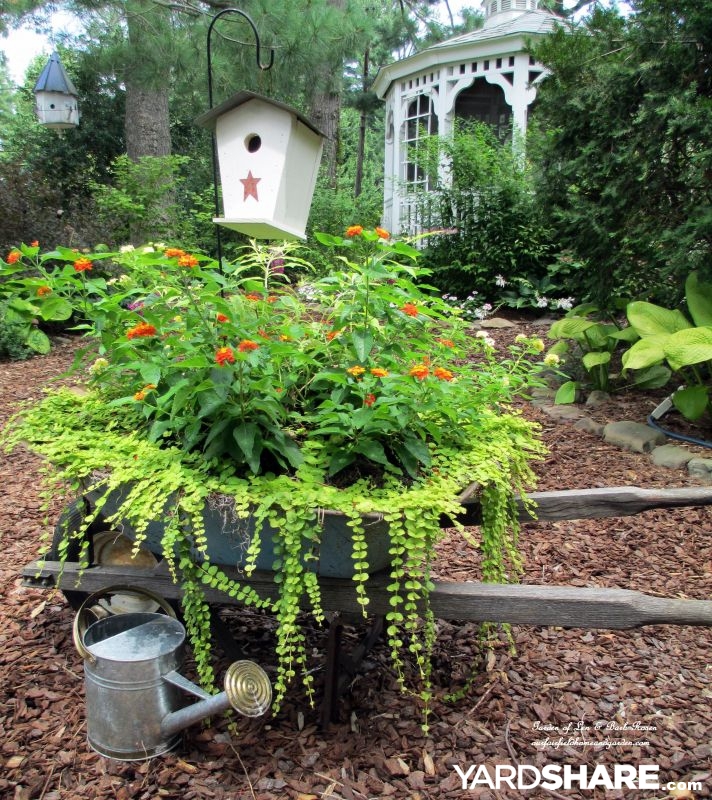
A wheelbarrow planter with orange flowers and trailing green foliage on thick bark mulch at Our Fairfield Home and Garden in Delaware, Zone 7, with hostas and a birdhouse nearby.
In South Carolina, in Zone 7, Donna F. switched her beds at Lowering Yard Maintenance from black mulch to pine needles, in her words because the dye would run off and into the pool. Pine straw is a fine winter mulch too: it knits together, stays put on slopes, and lets water through. The lesson is to pick the mulch that suits your yard and lay it thick, not to chase one perfect kind.
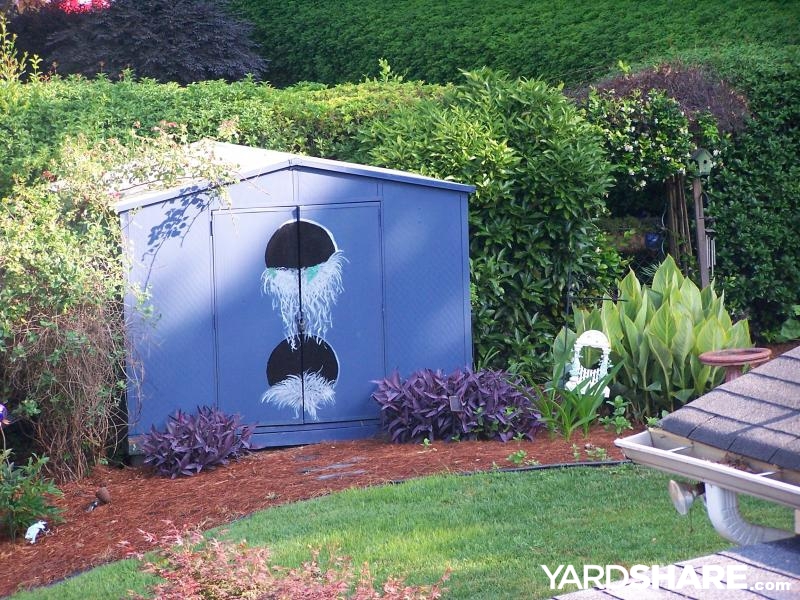
A bed of reddish pine needle mulch beside a blue shed at Lowering Yard Maintenance in South Carolina, Zone 7, with purple leaved plants and green shrubs.
Covers and wind protection
When a hard freeze is forecast for plants that are borderline in your zone, cover them for the night. Use cloth, an old sheet, or a purpose made frost cover, not plastic touching the leaves. Drape it so it reaches the ground, which traps the warmth the soil gives off, and anchor the edges so wind cannot lift it. Take covers off the next morning once the sun warms things up, unless a second freezing night follows.
Wind is half the battle in open yards. A row of tender shrubs on the windy side of a house benefits from a simple burlap screen on stakes for the winter, set a little way out from the plants so air still moves. Skip tight wrapping of evergreens in plastic, which traps moisture and cooks on a sunny day. If you wrap an evergreen against snow load, use twine wound gently upward so branches shed snow instead of splitting under it.
Pots and the tender things
A pot is the coldest place a plant can spend winter. Roots in the ground get the steady temperature of the earth. Roots in a pot get the air temperature on every side. Move pots you care about to an unheated garage, a shed, or against a sheltered wall, group them together, and wrap the pots, not just the tops, if they must stay out. In the snow photo below, from the same Missouri yard as the ice tree, the little evergreens in pots by the door are exactly the plants to pull close to the house before a storm.
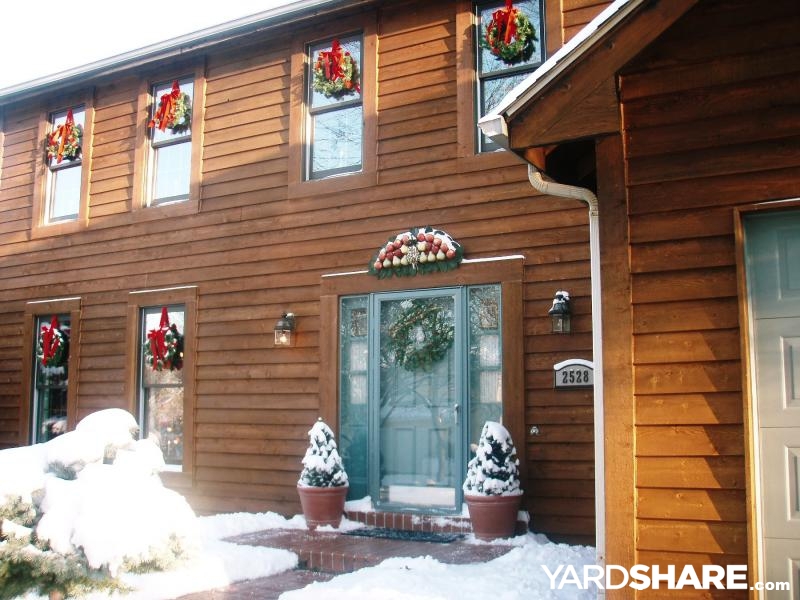
Snow on a front step in Missouri, Zone 7, with two small potted evergreens dusted with snow beside a door with a wreath.
Anything truly tender, citrus, tropicals, and annuals you are trying to save, has to come indoors or under cover in most zones. Do that before the first hard freeze, not after a light frost reminds you.
Zones 3 to 5: steady cold is coming
Your ground will freeze and stay frozen, so finish watering evergreens and new plantings before it does. Mulch perennials and strawberries after the ground cools, and mound mulch or soil around the base of tender roses once the ground turns cold. Expect freeze and thaw heaving in late winter more than deep cold damage now, and check in March for plants pushed up out of the soil, firming them back in with your foot.
Zones 6 to 7: watch the swings
Your winter is swings: a mild week, then a hard night. That makes mulch timing and covers your main tools. Mulch after a few frosts, keep a stack of frost cloth by the door from now through spring, and water before the coldest nights when the soil is dry. Leave mulch and covers in place through the last spring freeze, which in your zones can be weeks after the first warm spell tempts you to clear up.
Zones 8 to 9: protect against the rare hard night
Most of your winter is mild, and your risk is the one or two hard freezes that hit plants still growing. Keep frost cloth ready for citrus, young plants, and anything subtropical, water before a forecast freeze, and do not prune cold damaged growth off in a hurry afterward. Wait until spring growth shows you what actually died. A light mulch is plenty for most beds, and heavy mulch can hold too much wet against crowns in a rainy winter.
Zones 10 and up: a light touch
Hard freezes are rare for you, but a single cold night can still burn tender growth. Your job is mostly readiness: know which plants in your yard are the tender ones, keep covers where you can reach them, and water dry pots and beds before a cold night. Skip heavy winter mulch, and let your cool season be the growing season it is.
A simple weekend plan
Saturday morning: check the forecast for the next two weeks and water everything dry, evergreens and new plantings first. Saturday afternoon: spread mulch where the ground has cooled, 3 to 4 inches deep, pulled back from trunks and crowns. Sunday: move the pots to shelter, group the ones that stay out, and put frost cloth, old sheets, and a few bricks or stones to anchor them in one place by the door. When the hard night comes, you will only need ten minutes outside, and that is the whole point.
See more like it
- An evergreen yard that weathers Missouri winters: Backyard Oasis in the midwest
- Thick bark mulch in a Delaware cottage garden: Our Fairfield Home and Garden
- Pine needle mulch in South Carolina: Lowering Yard Maintenance
- Zone 7 yards and Zone 5 yards
- Find your zone: Hardiness Zones reference