Gardening in Alaska: Hardiness Zones, Frost Dates & What Grows
Alaska is not one garden climate but several. The interior around Fairbanks is zones 1 to 3, the coldest gardening ground in the United States. South-central Alaska around Anchorage is mostly zone 5, Juneau and the Southeast panhandle reach 6a to 8b on the rainy coast, and a few warm pockets touch 8b. Latitude sets the broad pattern, but the Alaska Range and the Pacific Ocean redraw it locally: the coast is far milder than the interior at the same latitude.
The statewide middle (last freeze May 21, about 122 frost-free days) hides almost everything. Wrangell, in the Southeast, gets the state's longest season at 202 days and a last freeze around Apr 11, while Cooper Landing can freeze into Jun 12 and Kasilof manages just 75 frost-free days. Where you are in Alaska matters more than the fact that you are in Alaska.
Alaska at a glance
| Hardiness zones | 1a to 8b, coldest to warmest ZIP code |
|---|---|
| Most common zone | 5a, covering 12% of the state's ZIP codes |
| ZIP codes covered | 272 |
| Changed in the 2023 map update | 63% of ZIP codes sit in a different half zone than on the 2012 map |
| Typical last spring freeze (32 °F) | May 21 |
| Typical first fall freeze (32 °F) | Sep 22 |
| Frost-free season | Typical 122 days; across the state it runs from 75 to 202 days |
| Winter chill, estimated | 3,931 to 4,368 hours below 45 °F, depending on the ZIP code |
| Weather stations behind the numbers | 99 NOAA stations serve the state's ZIP codes |
| Member yards with photos on YardShare | 2 |
How the zones spread across Alaska
Each row is one half zone found in the state, with the winter cold it stands for and the share of the state's ZIP codes in it. The zone guide for each row goes deeper: what grows there, when freezes come, and real yards in that zone.
| Half zone | Coldest night in a typical winter | Share of ZIP codes | ZIP codes | Zone guide |
|---|---|---|---|---|
| 1a | -60 to -55 °F | 2% | 5 | Zone 1 guide |
| 1b | -55 to -50 °F | 4% | 11 | Zone 1 guide |
| 2a | -50 to -45 °F | 10% | 27 | Zone 2 guide |
| 2b | -45 to -40 °F | 6% | 17 | Zone 2 guide |
| 3a | -40 to -35 °F | 7% | 18 | Zone 3 guide |
| 3b | -35 to -30 °F | 10% | 26 | Zone 3 guide |
| 4a | -30 to -25 °F | 11% | 31 | Zone 4 guide |
| 4b | -25 to -20 °F | 10% | 28 | Zone 4 guide |
| 5a | -20 to -15 °F | 12% | 33 | Zone 5 guide |
| 5b | -15 to -10 °F | 6% | 15 | Zone 5 guide |
| 6a | -10 to -5 °F | 1% | 4 | Zone 6 guide |
| 6b | -5 to 0 °F | 3% | 8 | Zone 6 guide |
| 7a | 0 to 5 °F | 8% | 21 | Zone 7 guide |
| 7b | 5 to 10 °F | 6% | 15 | Zone 7 guide |
| 8a | 10 to 15 °F | 3% | 9 | Zone 8 guide |
| 8b | 15 to 20 °F | 1% | 4 | Zone 8 guide |
Freeze dates and the growing season
Across Alaska, the middle ZIP code that freezes sees its last 32 °F spring freeze around May 21 and its first fall freeze around Sep 22, which makes a typical frost-free season of 122 days. Treat those as the state's middle, not your garden's dates. The spread inside the state is the real story:
- Earliest last spring freeze: Wrangell (ZIP 99929), around Apr 11.
- Latest last spring freeze: Cooper Landing (ZIP 99572), around Jun 12.
- Earliest first fall freeze: Fairbanks (ZIP 99706), around Aug 21.
- Latest first fall freeze: Port Alexander (ZIP 99836), around Nov 5.
- Shortest frost-free season: Kasilof (ZIP 99610), 75 days.
- Longest frost-free season: Wrangell (ZIP 99929), 202 days.
These dates are medians from 30 years of records, so in any single year your last freeze can land a week or two on either side. The ZIP code lookup also shows the cautious dates for your ZIP (the dates only about 1 year in 10 beats), and the seed starting calculator turns your ZIP's dates into a planting calendar.
The biggest places, and their numbers
The state's largest cities by population, each shown with the zone and freeze dates of its largest ZIP code. A big city can span several zones on the ground, so plant by your own ZIP's row in the table below, not by the city's.
| City | Zone | Last spring freeze | First fall freeze | Frost-free season |
|---|---|---|---|---|
| Anchorage | 5a | May 9 | Sep 26 | 138 days |
| Fairbanks | 3b | May 24 | Sep 1 | 98 days |
| Wasilla | 5a | May 16 | Sep 23 | 128 days |
| Juneau | 6a | May 3 | Oct 14 | 164 days |
| Eagle River | 5a | May 16 | Sep 20 | 125 days |
| Palmer | 5a | May 22 | Sep 16 | 114 days |
| North Pole | 2a | May 18 | Sep 5 | 110 days |
| Kenai | 5a | Jun 1 | Sep 8 | 94 days |
| Soldotna | 4b | Jun 11 | Sep 1 | 75 days |
| Jber | 5a | May 1 | Sep 29 | 150 days |
What grows well in Alaska
The boreal palette is the reliable one: paper birch, white spruce, and tamarack for trees; late lilac, Siberian peashrub windbreaks, and shrubby cinquefoil for shrubs; natives like lingonberry and kinnikinnick for the ground layer. Two Alaska lessons from the extension lists behind our zone 1 and 2 palettes: snow is insulation, and plants survive winters under snow that kill the same plants exposed; and cold air pools in valley bottoms, so fruit and tender perennials do best on a gentle slope, not in the hollow. The compensation for the short season is summer daylight: vegetables grow fast under near-24-hour light.
By zone, the proven highlights from our extension-sourced plant palettes:
| Zone 1 | Paper birch, white spruce, and tamarack anchor the boreal forest edge, and Rescue apples and Ussurian pears are the tree fruits that can make it |
|---|---|
| Zone 2 | Boxelder, balsam fir, and Amur chokecherry, with lilac hedges and caragana windbreaks on farmsteads |
| Zone 3 | Hackberry, silver maple, and thornless honeylocust; northern woodland and prairie windbreak plantings |
| Zone 4 | Everything reliable in zone 3 plus a second tier of trees and fruit; Great Lakes woodland and prairie gardens |
| Zone 5 | Hackberry, Kentucky coffeetree, river birch, and serviceberry; Midwestern prairie and oak savanna plantings |
| Zone 6 | Oaks, lilac, panicle hydrangea, and ninebark over the zone 5 anchors, with four season foundation plantings in the East |
| Zone 7 | Eastern redbud, Shumard oak, crape myrtle, and southern magnolia; the Piedmont spring garden |
| Zone 8 | Live oak, southern magnolia, laurel oak, and crape myrtle, with azaleas and camellias underneath in the South |
Real yards in Alaska
Real member yards from the archive, 2 with photos across the state:
-
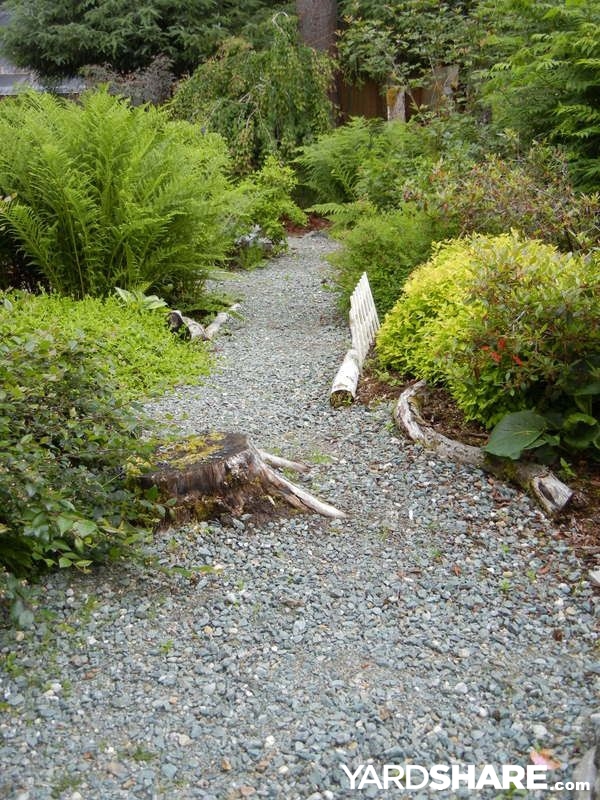 33 photos Zone 6
The Path to My Garden is Never Long
by Nancy NortonWe moved here in 2003 to a backyard of overgrown wild foliage and cottonwood trees. On my hands and knees...
-
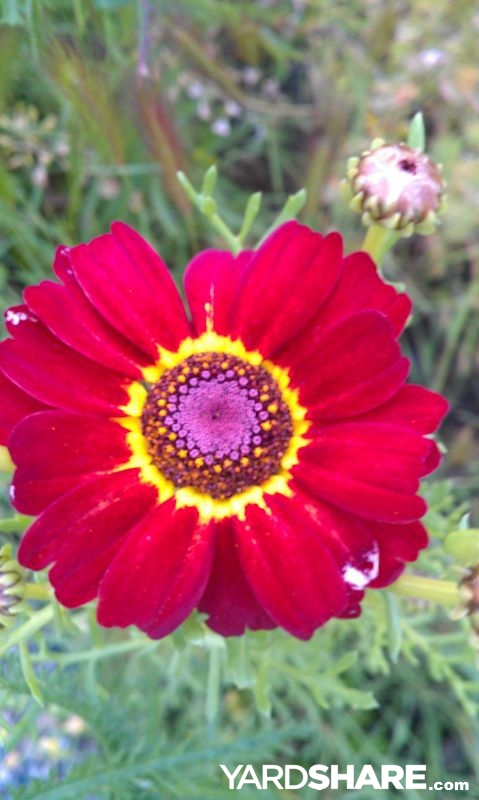 8 photos Zone 3
Vault City
We have been working with hard clay for about 8 years now and the yard is finally trans forming. With allot...
Looking for ideas rather than climate data? Browse real Alaska yards, filterable by feature, size, and style.
Alaska ZIP codes with 10,000 or more residents
The listing behind this page, capped where most of the state actually lives: 22 of Alaska's 272 ZIP codes have 10,000 or more residents. Each row carries its 2023 and 2012 zones, the median last spring and first fall freeze dates at 32 °F, and the frost-free season between them. Every figure above is computed from all 272 ZIP codes, including the smaller ones not listed here; if your ZIP code is not in the table, the ZIP code lookup has its exact dates. Start typing a ZIP code or a town name to filter the list.
| ZIP | Town | Zone 2023 | Zone 2012 | Last spring freeze | First fall freeze | Frost-free days |
|---|---|---|---|---|---|---|
| 99501 | Anchorage | 5a | 4b | May 1 | Sep 29 | 150 |
| 99502 | Anchorage | 5b | 5a | May 5 | Sep 29 | 147 |
| 99503 | Anchorage | 3a | 4b | May 13 | Sep 13 | 120 |
| 99504 | Anchorage | 5a | 4b | May 9 | Sep 26 | 138 |
| 99507 | Anchorage | 5a | 4b | May 18 | Sep 23 | 125 |
| 99508 | Anchorage | 5a | 4b | May 1 | Sep 29 | 150 |
| 99515 | Anchorage | 5a | 4b | May 5 | Sep 29 | 147 |
| 99516 | Anchorage | 5b | 4b | May 18 | Sep 23 | 125 |
| 99517 | Anchorage | 5b | 4b | May 1 | Oct 3 | 156 |
| 99518 | Anchorage | 5a | 4b | May 1 | Oct 3 | 156 |
| 99577 | Eagle River | 5a | 4b | May 16 | Sep 20 | 125 |
| 99611 | Kenai | 5a | 4b | Jun 1 | Sep 8 | 94 |
| 99615 | Kodiak | 7a | 7a | May 5 | Oct 3 | 151 |
| 99645 | Palmer | 5a | 4b | May 22 | Sep 16 | 114 |
| 99654 | Wasilla | 5a | 4b | May 16 | Sep 23 | 128 |
| 99669 | Soldotna | 4b | 4a | Jun 11 | Sep 1 | 75 |
| 99701 | Fairbanks | 3a | 2a | May 22 | Aug 24 | 94 |
| 99705 | North Pole | 2a | 1b | May 18 | Sep 5 | 110 |
| 99709 | Fairbanks | 3b | 2a | May 24 | Sep 1 | 98 |
| 99712 | Fairbanks | 3b | 2a | May 30 | Sep 2 | 95 |
| 99801 | Juneau | 6a | 6b | May 3 | Oct 14 | 164 |
| 99901 | Ketchikan | 7b | 7b | Apr 20 | Oct 26 | 189 |
Plan your Alaska garden
- Look up your zone by ZIP code, with the cautious freeze dates for your exact spot.
- Seed starting calculator: turn your ZIP's freeze dates into sowing and transplant dates.
- Chill hours estimator: check a fruit tree's winter chill needs against your ZIP before you plant it.
- Compare two zones side by side, handy if you garden in two parts of the state.
- All state guides: every state and DC, side by side.
Sources and method: zones from the 2023 USDA Plant Hardiness Zone Map per-ZIP listing (USDA and PRISM Climate Group, Oregon State University; 1991 to 2020 normals), with the 2012 listing behind the change figures. Freeze dates and season lengths are medians from NOAA NCEI 1991 to 2020 U.S. Climate Normals for the weather station serving each ZIP; 267 of the state's 272 ZIP codes have a station close enough to carry freeze data. Chill figures are estimates computed from the same NOAA monthly normals and are labeled as estimates wherever they appear. Town names and populations come from the site's ZIP code table. Plant highlights are from the YardShare zone plant palettes, drawn from university extension publications. A ZIP code can cross a zone boundary on the ground; the listing gives one zone for the ZIP as a whole.