Stone landscaping gets useful when it does real work.
The best real-yard examples are not just random piles of decorative rock. They solve something. Stone holds a slope, sharpens a patio edge, fixes a swampy side yard, builds steps where grade changes, or gives planting beds a tougher frame that does not wash out every season.
That is why the YardShare stone-and-rock lane is stronger than a generic rock-garden mood board. The best projects use gravel, boulders, steps, dry creek logic, and hardscape edges as structure first, decoration second.
Below are six real yards worth stealing from if you want stone landscaping that feels practical, durable, and livable.
1. Use gravel and stone to rescue a soggy small yard
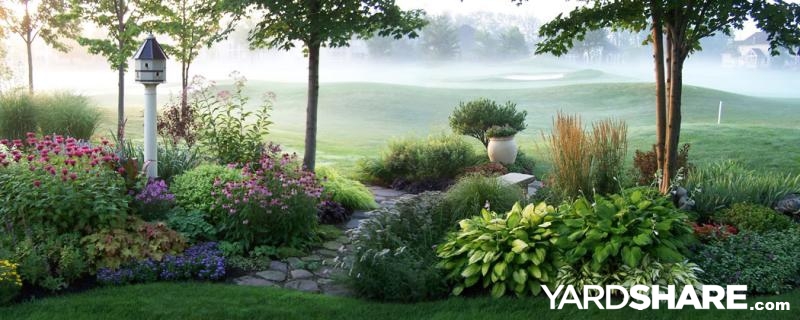
Source: Golf Course Garden
This is one of the best small-yard examples in the lane because the stonework starts with a real problem. The owner says the area was always swampy, so they added three tons of pea gravel, stepping stones, a bench, and a dry-creek-style bridge path to make the space usable.
That is the right way to think about stone. It is not filler. It is problem-solving material.
Steal this idea: If one part of the yard stays wet or messy, gravel plus stepping stones can turn it into a usable sitting or circulation zone without forcing a full rebuild.
2. Let found stone become the backbone of slope control
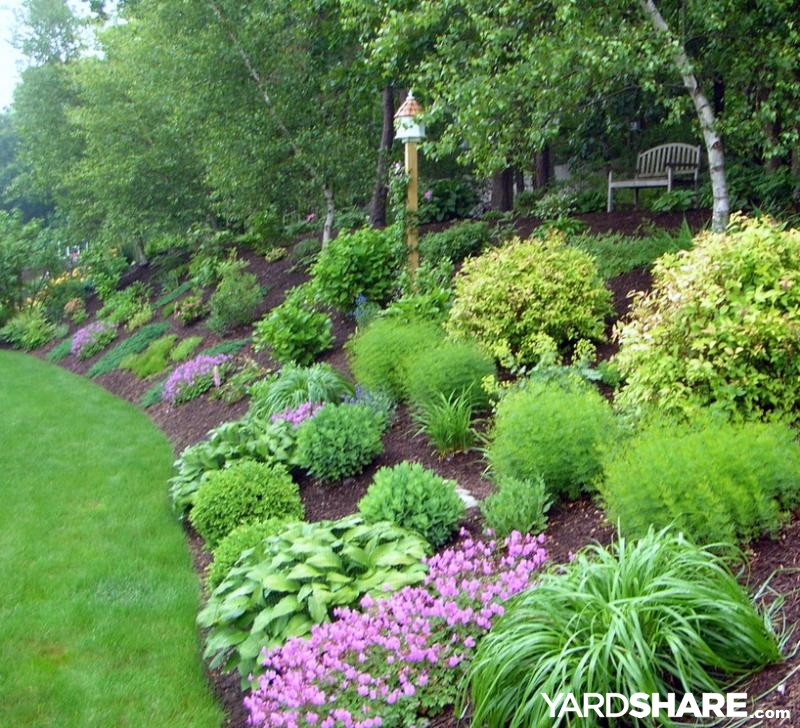
Source: The Challenge of a Hill . . .
This yard shows a steep sandy hill that needed both planting strategy and physical structure. The owner notes that the steps were built from stones they found while digging for the garden. That detail matters because it keeps the project grounded in homeowner-scale reality.
The result is not flashy, but it is exactly the kind of stone move that makes a difficult yard feel settled.
Steal this idea: On a slope, stone steps and simple edging can do more for usability than chasing perfect lawn coverage. Start by making the grade walkable and stable.
3. Build the rock garden, but keep the planting flexible
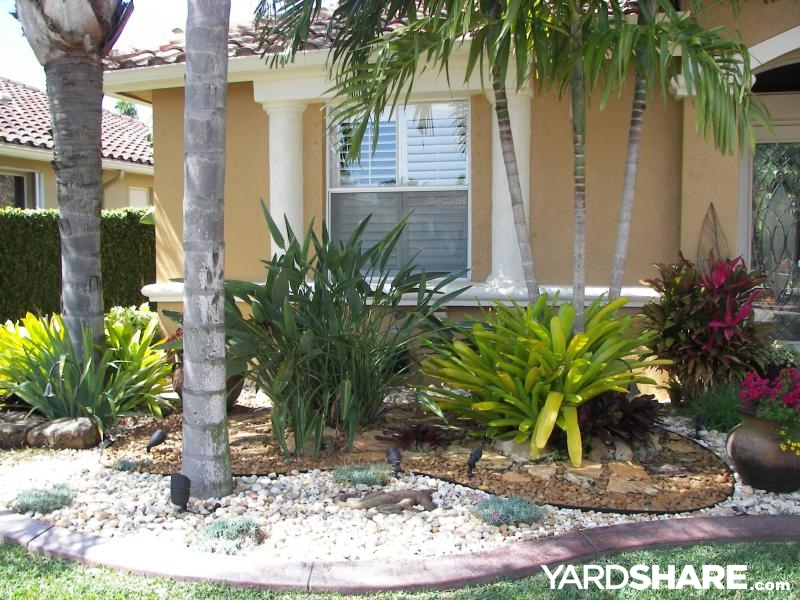
Source: UPDATED ROCK GARDEN
This one earns its spot because it is openly labor-heavy and homeowner-built. The owner describes hauling hundreds of bags of rocks, then changing out flowers in pots to keep the look fresh over time.
That combination is useful. The stone gives the yard permanent bones, while the containers and planting provide seasonal change.
Steal this idea: If you like rock-garden texture but do not want a static yard, use stone for the lasting framework and let pots or smaller planting pockets handle the yearly refresh.
4. Use stone and pavers to create clear level changes around patios
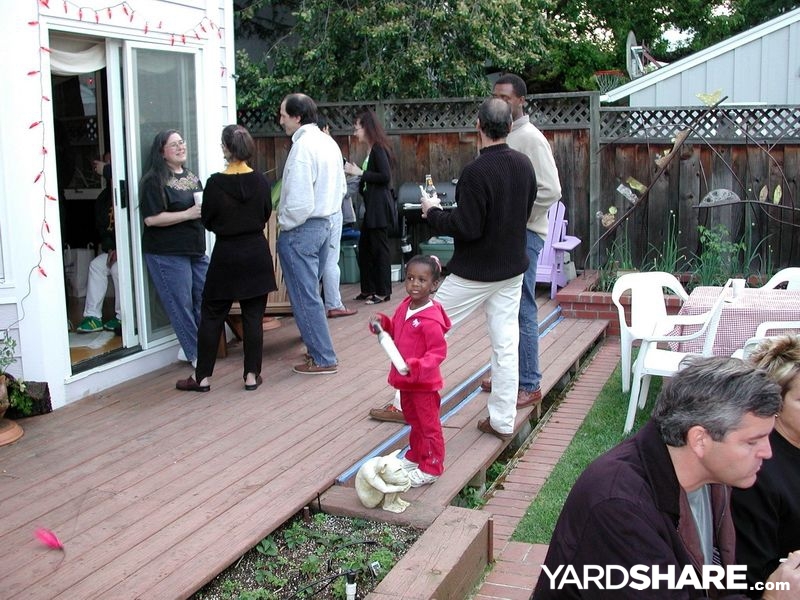
Source: Geckos!
Geckos! is a strong practical example because it is basically a demolition-and-rebuild story. The owners removed an old deck, excavated the yard, added base rock and sand, laid out retaining walls, built steps, and finished with interlocking hardscape.
It is more patio-forward than garden-forward, but that is exactly why it belongs here. Stone landscaping often works best where the yard needs level changes, clean edges, and durable transitions between lawn, planters, and living space.
Steal this idea: If an old deck or awkward patio is dictating the whole yard, rebuilding the stone base and edge logic can give the entire space a cleaner structure.
5. Treat stonework as the organizer for a full backyard build
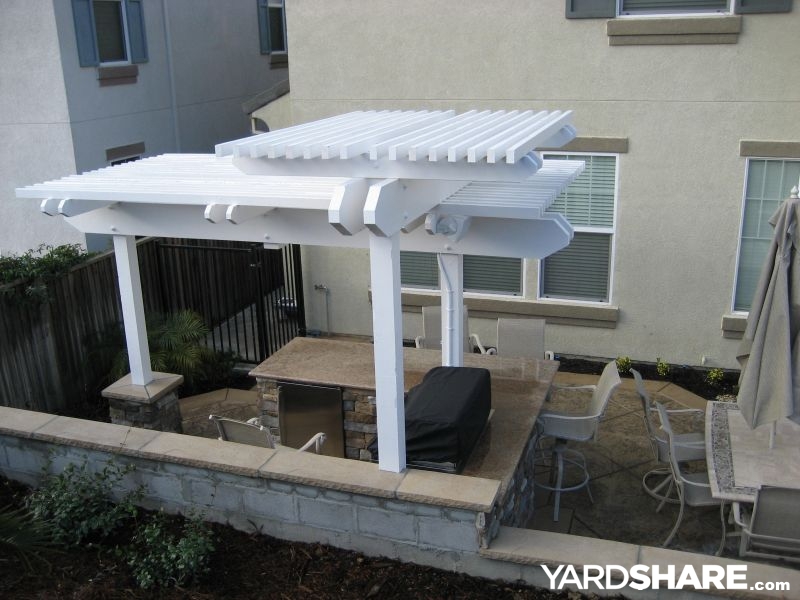
Source: Backyard from Scratch
This project shows stone as part of a broader backyard system, not a single feature. The owner calls out careful planning, a built-from-scratch barbecue, an arbor, irrigation, and doing the stonework themselves.
That makes it a useful example for readers who are not just adding a little gravel bed. Sometimes stone is the material that organizes the whole yard, especially when cooking, spa, seating, and circulation all need to fit together.
Steal this idea: When the yard has multiple destinations, stonework should connect them. Think about cook zone, seating zone, and access path as one composition instead of separate little projects.
6. A little rock around water can make a modest yard feel layered
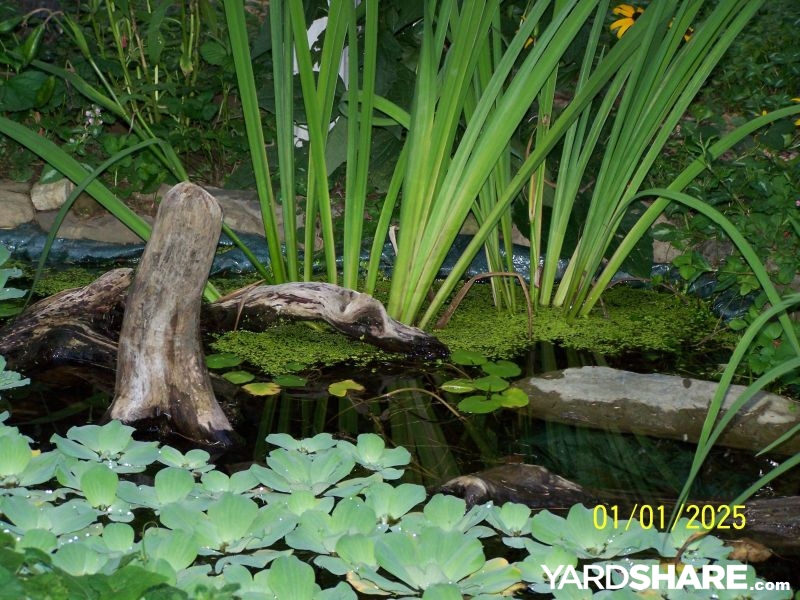
Source: The Woods People
This is the modest-scale example the roundup needs. The yard is only about a quarter acre, and the owners expanded a pond and added a shallow rock-filled birdbath area surrounded by hostas and mixed planting. It is incremental, personal, and very copyable.
The lesson is that stone does not need to arrive as a giant retaining wall or an elaborate hardscape install. Sometimes it works by giving a small water feature or planting pocket a more finished edge.
Steal this idea: Even in a modest yard, a little rock used around a pond edge, birdbath zone, or planting pocket can create more texture and permanence without making the space feel overbuilt.
The big pattern: stone works best when it solves edge, grade, or circulation
- gravel and stone help reclaim soggy, awkward, or high-traffic areas
- steps and dry-stacked structure are often the real win on sloped sites
- rock works best at edges, transitions, and drainage moments, not just as scattered filler
- hardscape becomes more livable when planting softens it instead of competing with it
- even modest yards can use stone successfully when the goal is structure, not spectacle
That is what makes stone-rock such a strong practical lane right now. It naturally overlaps with retaining-wall, path, driveway, patio, and front-yard cleanup work without losing its own identity.
Final takeaway
Stone landscaping is at its best when it makes the yard easier to use.
If the rocks, gravel, steps, or pavers solve drainage, hold a slope, clean up a transition, or create a clearer path through the yard, they are doing real landscape work. That is the thread that ties the best YardShare stone examples together.
If you want more real-yard inspiration in the same lane, keep browsing YardShare's stone and rock ideas, then compare them with retaining-wall ideas from real yards, driveway landscaping ideas from real homes, path and walkway ideas from real yards, patio ideas, and front-yard curb appeal ideas to decide where stone should do the most work in your own yard.
See it in a real yard
If you want more practical stone examples with actual layouts and before-and-after logic, jump into these YardShare yard pages next:
- Golf Course Garden for gravel, drainage, and a swampy-yard rescue
- The Challenge of a Hill . . . for homeowner-scale slope steps and structure
- Backyard from Scratch for a full-yard stonework system tied to real use zones
If you are comparing how these features fit into a complete sitting, dining, or transition zone, the newer real-yard patio and outdoor-living guide is a useful next read.